

What Happens in the 60 Seconds After a Customer Leaves Your Website Without Buying


It starts the moment they click away.

A customer has just spent time on your website. They found the product they wanted. They checked the size. They looked at the images. They read the description.

They were ready to buy.

But there was no way to complete the purchase. So they left.

You probably think the story continues neatly from there. They click your “Find A Stockist” page, scan the list, recognise a name nearby, navigate to that retailer’s website, search for the product again, hopefully find the right size and colour, check if it’s actually in stock, create an account, enter their details, and complete the purchase.

All on a different website. For a product they’d already decided to buy on yours.

In reality, most customers won’t do all of that. Each additional step is a new opportunity to abandon the process entirely. Each new website is a new distraction. Each login screen is a new reason to think “I’ll do this later.”

Later rarely comes.

Here’s what actually happens in the 60 seconds after they leave.

Second 1-5: The Cookie Fires

The moment they exit your site, the tracking pixel you almost certainly have installed fires a cookie onto their browser. This is standard practice and it’s working exactly as intended — except it’s now working for everyone, not just you.

Every other brand whose pixel they’ve ever triggered now knows they’re in a buying mindset. They’ve just visited a product page. They didn’t convert. They’re a warm lead.

And warm leads are worth paying for.

Second 6-15: The Auction Begins

Programmatic advertising works in real time. In the milliseconds it takes a webpage to load, hundreds of advertisers are bidding for the right to show that person an ad.

Your competitors are in that auction right now.

They know someone just visited a watersports brand, or a cycling brand, or a workwear brand, without buying. That’s a signal. That signal has value. And they’re willing to pay for it.

Second 16-30: The First Competitor Ad Appears

By the time your customer has opened a new tab — whether it’s Google, a news site, social media, or anywhere else — the first competitor retargeting ad has already appeared.

It might be subtle. A banner in the corner. A sponsored post in their feed. A “people also viewed” suggestion.

But it’s there. And it’s not yours.

Second 31-45: Social Media Joins In

Facebook, Instagram, TikTok — they all have their own pixel data and their own interest signals. The moment someone visits a product page and doesn’t convert, the algorithm files that information away.

Within minutes your customer is scrolling their feed and seeing ads from brands they’ve never even visited. Brands that have been waiting for exactly this signal — someone actively shopping in their category who hasn’t yet committed.

Your marketing budget just generated a warm lead for your competitors.

Second 46-60: The Window Closes

Here’s the brutal truth about purchase intent.

It peaks at the moment of decision and decays almost immediately afterwards. The customer who was ready to buy 60 seconds ago is now distracted, retargeted, and being pulled in four different directions at once.

The longer the gap between intent and purchase, the less likely the purchase ever happens.

Research consistently shows that conversion rates drop dramatically within minutes of a customer leaving a site without buying. Every minute that passes, every competitor ad that appears, every distraction that intervenes — the chance of getting that customer back shrinks.

By the time they’ve finished scrolling their feed, your brand is one of five they’re now vaguely considering. And you were the only one they’d already decided on.

The Maths Nobody Talks About

Think about your marketing spend for a moment.

Every pound you spend on Google Ads, social media, influencer partnerships or SEO is designed to do one thing — bring a customer to your website at the moment they want to buy.

If that customer leaves without buying, you’ve paid for the acquisition but captured none of the value.

Worse — you’ve paid to warm up a lead that your competitors then convert for free.

This happens thousands of times a day across wholesale brands who send customers to stockist finders instead of completing the sale at the point of intent.

The stockist finder isn’t a solution. It’s an expensive delay.

The Point of Intent Is Everything

The most valuable moment in any customer’s journey is the moment they decide to buy.

Not the moment they research. Not the moment they compare. The moment they decide.

That moment happens on your website. It happens when they’re looking at your product, reading your copy, and reaching for their wallet.

If you can’t capture that moment — if you have no way to complete that transaction right there and then — you are giving away the most valuable thing your marketing spend creates.

There Is a Better Way

Relay Orders was built for exactly this moment.

When a customer places an order on a brand’s website, Relay Orders instantly broadcasts that order to the brand’s entire reseller network. The first reseller to confirm stock claims the order and fulfils it from their own inventory.

The customer completes their purchase at the exact moment of intent. On your website. In your brand environment. With your customer data captured.

The retargeting clock never starts. The competitor auction never fires. The 60 second window stays firmly closed.

Your resellers fulfil the order. Your brand keeps the customer. Your marketing spend finally converts the way it was always supposed to.

The demand was always there.

Relay Orders makes sure it doesn’t disappear in 60 seconds.
B2B2C: The Model Everyone’s Talking About — And the Missing Piece Nobody’s Built


If you’ve been paying attention to ecommerce in the last couple of years, you’ll have noticed a phrase appearing more and more frequently.

B2B2C.

Business to Business to Consumer.

BigCommerce describes it as a model where brands sell through partners — distributors, wholesalers, retailers — who then sell to the end consumer. The brand gets reach. The partner gets product. The customer gets a seamless experience.

On paper it’s perfect.

In practice, there’s a problem nobody talks about.

The Theory Is Sound. The Execution Is Missing.

B2B2C as a concept has been around for decades. Brands have always sold through reseller networks. That’s not new.

What’s new is the ecommerce layer.

Consumers now go directly to brand websites to research, discover and decide. They want to buy at the point of intent — not be redirected to a stockist finder and left to figure it out themselves.

So brands face a choice.

Do they sell direct and upset the retailers who’ve built their business?

Or do they hold back on ecommerce and watch customers disappear?

BigCommerce and other major platforms have recognised this tension and positioned B2B2C as the answer. And they’re right — it is the answer.

But here’s what they don’t tell you.

Describing the model isn’t the same as solving the problem.

The Questions Nobody Answers

If a customer places an order on a brand’s website, and that order is supposed to be fulfilled by a reseller — how does it actually get there?

Which reseller gets the order? The nearest one? The fastest one? The one with stock?

What happens if that reseller doesn’t have the product in the size or variant the customer ordered?

What happens if two resellers try to claim the same order simultaneously?

How does the brand keep the customer data when a reseller fulfils?

How does the reseller know the order is coming in time to ship it same day?

These are not hypothetical questions. These are the operational realities that sit between the B2B2C theory and the B2B2C reality. And until now, nobody has built a clean answer to any of them.

Enter Relay Orders

Relay Orders is the operational layer that makes B2B2C actually work.

Here’s how it works in practice.

A customer visits a brand’s website and places an order. That order is instantly broadcast in real time to every reseller in the brand’s network. Every eligible reseller receives a notification simultaneously — not sequentially, not regionally pre-assigned, but all at once.

The first reseller to confirm they have the stock claims the order. They fulfil it from their own inventory. The customer gets their product, often faster than if the brand had shipped it themselves.

The brand retains the customer relationship, the payment, and — critically — the data. They know who bought, what they bought, when they bought, and where it was fulfilled from. That data feeds back into their marketing, their demand visibility, and their reseller relationships.

The reseller gets a sale they didn’t have to generate. No advertising spend. No customer acquisition cost. Just a notification, a claim, and a fulfilment.

Why This Changes Everything for Resellers

One of the most underappreciated aspects of this model is what it does to reseller behaviour.

In a traditional wholesale relationship, resellers cherry pick. They stock the bestselling sizes, the most popular colours, the highest margin lines. The awkward sizes, the slower moving variants, the newer product lines — they get ignored.

Why would a reseller stock something they’re not sure they can sell?

Relay Orders changes that calculation entirely.

Every product a reseller stocks is now a potential Relay Orders fulfilment opportunity. Holding a broader range, deeper stock, and faster response times all increase the reseller’s chance of winning orders. The incentive to hold “difficult” stock suddenly makes commercial sense.

This is what BigCommerce means by B2B2C creating a win-win-win. But it only actually becomes a win-win-win when the operational mechanics are in place to make it work.

The Moment of Intent

There’s another dimension to this that the B2B2C theory often glosses over.

The window between a customer deciding they want something and actually completing a purchase is incredibly short.

The moment a customer leaves a brand’s website without buying, the internet works against that brand. Cookies fire. Algorithms activate. Competitor retargeting campaigns begin appearing across every platform the customer visits. Within minutes, what started as your customer is being actively pursued by someone else.

This is why capturing demand at the exact point of intent isn’t a nice-to-have. It’s essential.

Every redirect to a stockist finder is a gamble. Every “where to buy” page is a leak in your funnel. Every moment between intent and purchase is an opportunity for a competitor to intervene.

Relay Orders closes that window. The customer buys on the brand’s site, at the moment of intent, and the fulfilment happens invisibly behind the scenes through the reseller network.

Built for the Platforms Brands Already Use

Relay Orders integrates directly with WooCommerce, Shopify and BigCommerce — the three platforms powering the majority of UK brand ecommerce.

There’s no rip and replace. No six month implementation project. No disruption to existing operations. Brands are live within days, not months.

Resellers need nothing more than an email notification and access to a lightweight dashboard. The barrier to participation is deliberately minimal.

The B2B2C Future Is Here

BigCommerce called it. The model works. The theory is sound.

Relay Orders is the piece that was missing.

We’re currently looking for founding brands to pilot Relay Orders completely free for six months. If you run a wholesale brand with a reseller network and you’ve ever felt the tension between growing online and protecting your retailer relationships — we’d love to talk.

The demand is already there.

Relay Orders makes sure it doesn’t go to waste.

The Problem Nobody in Wholesale Talks About


There’s a tension sitting at the heart of almost every wholesale brand in the UK.

It doesn’t get discussed at trade shows. It rarely makes it into industry publications. But if you run a brand that sells through a reseller network, you feel it every single day.

It goes something like this.

Your marketing is working. Traffic to your website is up. Customers are finding you, researching your products, and arriving at your site ready to buy. And then — nothing. Because you can’t sell direct without upsetting the retailers who’ve stocked your brand for years.

So you do what most brands do. You point them at a stockist finder. You hope they follow through. You lose the sale, the data, and any chance of ever marketing to that customer again.

Meanwhile, somewhere across the country, a competitor retargeting ad is already chasing them down.

The Ecommerce Trap

For years, wholesale brands avoided ecommerce entirely. The logic was simple — if we sell direct, our retailers stop stocking us. And without our retailers, we lose the shelf presence, the local expertise, and the relationships that built this business in the first place.

So they held back. While DTC brands grew, wholesale brands watched from the sidelines, quietly losing customers to brands who had no such reservations.

Then something changed. Consumers started going directly to brand websites first. Not to buy — just to research, to verify, to decide. And brands realised that even if they didn’t want to sell direct, they needed to show up online. They needed a website worth visiting. They needed ecommerce capability.

But the moment they launched it, the tension got worse. Now retailers weren’t just worried about the future — they could see the brand selling direct right now. Relationships started to fray. Stocking decisions became more cautious. The very thing brands built to grow their business was quietly damaging it.

The Data Nobody Captures

Here’s what makes this problem even more painful.

Every time a customer visits a brand website and gets redirected to a stockist, that customer disappears. The brand has no idea whether they bought, where they bought, or whether they ever came back. The marketing spend that drove them there is impossible to attribute. The demand that exists is invisible.

And the retailers? They’re making stocking decisions based on gut feel and historical sales data. They don’t know what customers are searching for on the brand’s website. They don’t know which sizes are being requested. They don’t know which products are generating demand that nobody is capturing.

There is demand. There is stock. They are simply not connected.

The Moment of Intent

The window between a customer deciding they want something and actually buying it is incredibly short.

The moment they leave your site without purchasing, the internet works against you. Cookies fire. Algorithms kick in. Competitor retargeting ads begin appearing in their feed, on their social media, across every website they visit. What started as your customer becomes someone else’s sale — often within minutes.

This is why capturing demand at the point of intent isn’t just nice to have. It’s essential. Every redirect to a stockist finder is a gamble. And the odds get worse every year as retargeting becomes more sophisticated.

There Is a Third Option

Most brands think they have two choices. Sell direct and damage retailer relationships. Or don’t sell direct and leave money on the table.

Relay Orders is the third option.

It’s an order routing platform that sits between a brand’s website and their reseller network. When a customer places an order on the brand’s site, Relay Orders broadcasts that order to the brand’s resellers in real time. The first reseller to confirm they have the stock claims the order and fulfils it from their own inventory.

The brand captures the sale at the point of intent. The brand retains the customer data and the relationship. The reseller fulfils the order and earns the margin. Nobody loses.

For resellers, this changes everything. Instead of competing against the brand’s website, they’re benefiting from it. Every pound the brand spends on marketing potentially drives an order to their door. Stocking more products, broader size ranges and faster response times all increase their chance of winning fulfilment. The incentive to hold deeper stock has never been clearer.

For brands, the channel conflict disappears. They can invest in ecommerce, drive traffic, build their online presence — and know that every sale completed through their website strengthens their retailer relationships rather than damaging them.

Built for the Brands That Built Britain

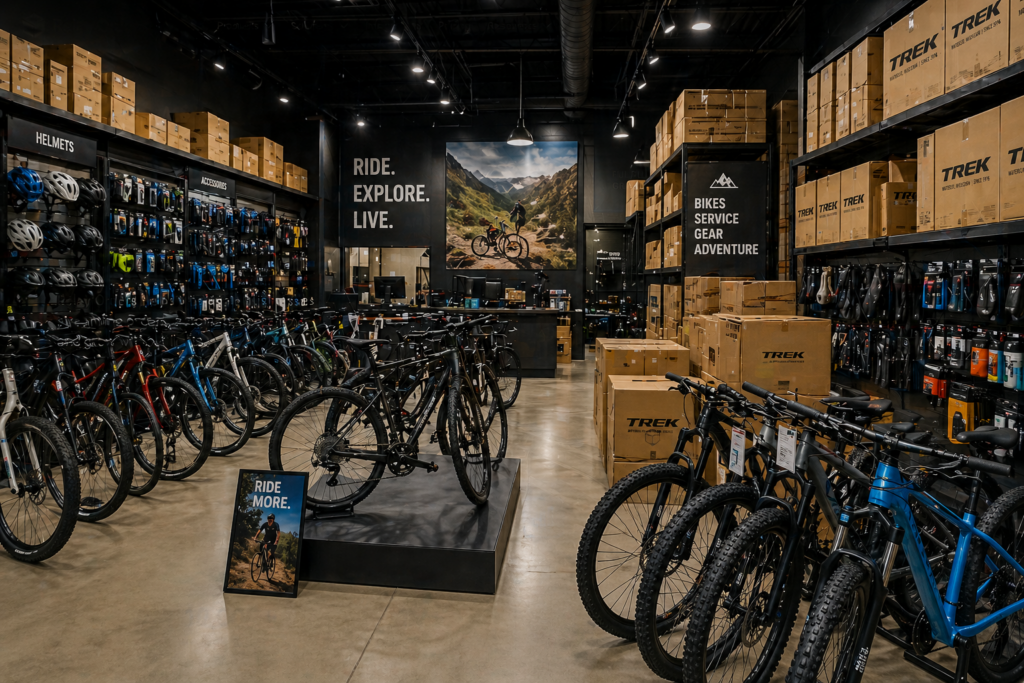
Relay Orders was built for wholesale-first brands. The cycling brands whose products sit in every independent bike shop. The equestrian brands stocked by every riding centre. The tool manufacturers whose products fill the shelves of every trade counter in the country.

These are brands with heritage, with loyal retailer networks, and with customers who actively seek them out. They deserve an ecommerce solution that respects those relationships rather than destroying them.

We’re currently looking for founding brands to pilot Relay Orders completely free for six months. If you run a wholesale brand and you’ve ever felt the tension between growing online and protecting your retailer relationships — we’d love to talk.

The demand is already there. Relay Orders makes sure it doesn’t go to waste.